How to Clean an Espresso Machine
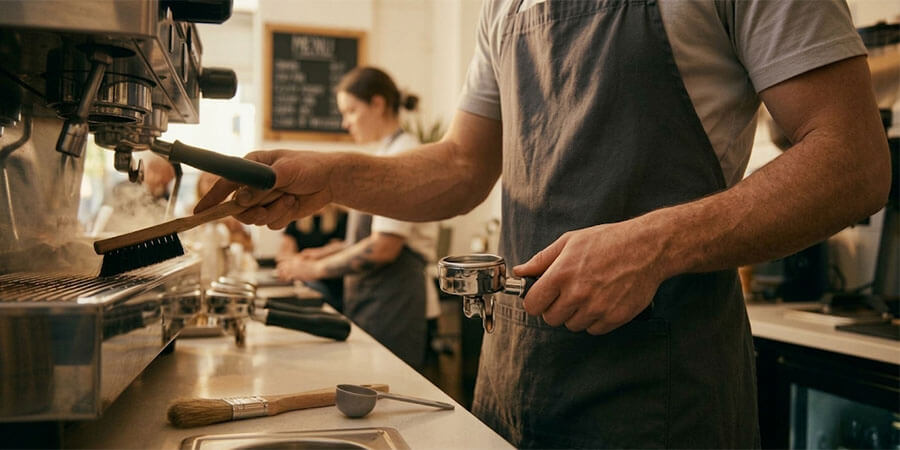
Table of Contents
Keep espresso tasting clean and equipment running reliably with a safer cleaning routine built around daily care and manual-first maintenance
An espresso machine can look clean from the outside and still be carrying coffee oils, milk residue, scale, and buildup in the places that most affect flavor and reliability. That is why espresso-machine cleaning is not one task. It is a group of routines that happen at different intervals.
The safest way to approach the job is simple: follow the machine manual first, separate daily cleaning from backflushing and descaling, and avoid internet shortcuts that can damage parts or leave residue behind. This guide is written to help staff understand that structure without pretending every espresso machine works exactly the same way.
What "Cleaning an Espresso Machine" Really Includes
One of the biggest maintenance mistakes is treating every espresso task as if it were the same thing.
| Task: | What It Removes: | Where It Applies: | Why It Matters: |
| Daily cleaning | Coffee residue, splashes, loose grounds, milk residue | Exterior, portafilters, baskets, steam wand, drip area | Keeps flavor cleaner and prevents obvious buildup |
| Backflushing | Coffee oils and residue inside the brew path on compatible machines | Group head and internal brew path | Protects shot quality and keeps the group cleaner |
| Descaling | Mineral buildup from water | Internal water path, boilers, valves, and related components | Helps prevent flow, temperature, and service problems |
| Deep part soaking | Hardened residue on removable parts | Baskets, screens, selected parts per manual | Restores performance where daily rinsing is not enough |
These tasks overlap, but they are not interchangeable. A machine can be wiped down and still need backflushing. A machine can be visually clean and still need descaling. A steam wand can look fine and still harbor dried milk residue if the purge-and-wipe routine is sloppy.
If you are building or upgrading the full coffee station, the Commercial Espresso Machine Buying Guide gives the broader equipment context.
Read The Manual Before You Start
This may sound obvious, but it is the most important step on the page.
Different espresso machines vary in three ways that matter for cleaning:
- whether they support manual or automatic backflush cycles
- whether selected parts are designed to be removed and soaked
- what descaling chemistry and intervals are approved for that exact machine
That is why no public article should tell you to pour random household cleaners into a commercial espresso machine. The safe process depends on the manufacturer instructions, the water system, and the machine type.
This also means one of the most common search queries deserves a careful answer: if you are wondering how to clean an espresso machine with vinegar, the safest general answer is usually to avoid improvising and use the cleaner or descaler your manual calls for. Acids, dilution, material compatibility, and rinse requirements vary too much for generic internet shortcuts to be trustworthy.
What To Clean Every Day
Daily cleaning is what keeps flavor drift and obvious buildup from getting ahead of the bar team.
Steam wand. Purge it after each use, then wipe it with a clean dedicated cloth. At close, clean it more thoroughly according to the manual. Milk residue hardens quickly, and once it bakes on, it is much harder to remove safely.
Portafilters and baskets. Rinse them throughout service and clean them more thoroughly at the end of the shift. Old coffee oils are one of the fastest ways to make fresh espresso taste stale.
Group area. Brush or wipe away loose grounds and residue around the group area as part of close. Even before a detergent backflush, this keeps loose debris from building up where it should not.
Drip tray and splash zones. Empty, wash, and dry them. These areas do not directly make espresso, but they strongly affect sanitation and how well the station is kept overall.
| Daily Task: | Why It Matters: | Common Failure Point: |
| Purge and wipe steam wand | Prevents milk residue and clogging | Staff rush and skip the wipe |
| Rinse portafilters and baskets | Reduces stale oil flavor | Old grounds left to dry in place |
| Brush or wipe group area | Keeps loose coffee from building up | Grounds stay under the screen area |
| Empty and clean drip tray | Reduces odor and sanitation problems | Tray is ignored until overflow or slime appears |
| Wipe exterior surfaces | Keeps controls and work area clean | Dirty station hides bigger maintenance issues |
For the wider coffee station setup, it helps to compare both the main espresso-machine category and the broader coffee-equipment category as part of station planning.
Backflushing: When It Applies And Why It Matters
Backflushing is one of the most important cleaning tasks on many traditional commercial espresso machines, but it is not universal. Some machines support manual backflushing with a blind basket. Some include an automatic cleaning cycle. Some machine types do not use the same process at all.
What backflushing does is circulate water, and on detergent cycles the approved cleaner, through the compatible brew path to remove coffee oils and residue that normal rinsing does not reach well enough.
The practical lesson is this:
- use water backflush or automatic rinse cycles as your machine recommends
- use detergent only when the machine and manual call for it
- rinse thoroughly before pulling drinks again
- do not assume every machine in the building follows the same backflush routine
If shots start tasting bitter, stale, or strangely heavy even with fresh coffee and good dialing, a neglected group-cleaning routine is one of the first things to review.
Descaling Is Not The Same As Cleaning
Descaling removes mineral buildup left behind by water. That is a different problem from coffee oils or milk residue.
Scale buildup can contribute to:
- slower water flow
- reduced heating efficiency
- unstable temperature behavior
- valve and internal component stress
- more expensive service calls later
But descaling should never be treated as a casual monthly ritual copied from a random video. Water hardness, filtration, softening, and machine design all affect how often it is needed. Many operations with strong water treatment and good preventive maintenance can stretch intervals much farther than people assume, while hard-water sites may need more frequent attention.
The safest public guidance is to follow the machine manual and your water-treatment reality. If you are seeing slower flow, repeated mineral residue, or technician advice tied to your local water quality, that is when descaling becomes part of the conversation.
If filtration is part of the root issue, the Water Filter Guide is the most helpful related read.
A Better Daily, Weekly, And Periodic Routine
The easiest way to keep espresso maintenance from becoming guesswork is to divide it by frequency.
| Frequency: | What To Do: | Goal: |
| Every shift or daily | Purge and wipe steam wand, rinse portafilters, clean baskets, wipe station, empty drip tray | Protect flavor and sanitation |
| Daily close or per manual | Group cleaning and rinse cycle, compatible backflush routine | Remove coffee oils and residue before they harden |
| Weekly or periodic per manual | Soak approved removable parts, inspect screens and baskets, review wand condition | Catch buildup that daily wiping misses |
| As needed per water conditions and manual | Descaling or technician-guided scale removal | Prevent internal water-path issues |
| Ongoing | Review water filtration, staff habits, and flavor consistency | Prevent recurring maintenance problems |
This kind of rhythm is much more useful than a generic "five tips" list because it helps the team understand what belongs in the daily close, what belongs in a deeper clean, and what should not be improvised.
The Steam Wand Deserves Its Own Discipline
Milk residue causes an outsized share of espresso-machine sanitation and flavor problems.
The safest routine is straightforward:
- purge before and after steaming if your standard operating procedure calls for it
- wipe immediately with a clean dedicated cloth
- never let milk dry on the wand between drinks
- clean the tip and approved removable pieces according to the manual
Teams often focus on the espresso side and underestimate the milk side. That is backwards. A neglected steam wand can create sanitation problems fast, and it can also affect performance if the tip becomes restricted.
If the machine serves a high volume of milk drinks, separate steaming support equipment can also matter when you are evaluating beverage-station workflow.
Cleaning Products: Match The Product To The Job
The right cleaner is the one intended for the machine and the task.
That usually means:
- approved espresso-machine cleaner for compatible backflush or brew-path cleaning
- approved descaler for scale removal when needed
- food-equipment-intended cleaners for removable parts and surrounding equipment surfaces when appropriate
- no improvising with harsh chemicals or random household products
If you are sourcing support products, start with Food Equipment Cleaners, Descalers, and Degreasers and then narrow by application and label instructions. The manual still decides the final answer.
Signs Your Espresso Machine Needs More Attention
Do not wait for a breakdown to decide the machine needs maintenance.
Watch for:
- bitter or stale espresso even after recipe adjustments
- weak steam performance or irregular wand flow
- visible residue on baskets, screens, or wands
- slower flow than normal
- recurring leaks, drips, or inconsistent brew behavior
- scale buildup around water-contact points
Some of these point to cleaning. Some point to water quality. Some point to service. The value of a disciplined cleaning routine is that it helps you separate simple maintenance issues from problems that need a technician.
When To Stop Cleaning And Call For Service
Cleaning helps a lot, but it does not solve everything.
If the machine keeps showing abnormal pressure behavior, unstable temperatures, repeated leaks, electrical issues, or inconsistent performance after correct cleaning, it is time to escalate. Repeating the same detergent cycle on a machine that really has a component or scale problem wastes labor and can delay the real fix.
The best operators treat cleaning as preventive maintenance, not as a substitute for diagnosis.
Frequently Asked Questions
How often should I clean an espresso machine?
Some espresso-machine cleaning tasks belong in every shift, especially steam-wand wiping, basket rinsing, and basic station cleanup. Deeper cleaning tasks like detergent backflushing, part soaking, and descaling should follow the manual and the machine's real workload, water conditions, and design. Daily care is universal. The deeper schedule is machine-specific.
Can I clean an espresso machine with vinegar?
The safest general answer is usually no unless the exact machine guidance specifically allows it. Espresso machines use different materials, internal components, and water systems, so improvising with vinegar can create compatibility, residue, or warranty problems. Use the cleaner or descaler your manual specifies.
What is the difference between backflushing and descaling?
Backflushing removes coffee oils and brew-path residue on compatible machines. Descaling removes mineral buildup caused by water. They solve different problems. A machine may need one, the other, both, or neither at a given moment depending on usage and water conditions.
Do all espresso machines need backflushing?
No. Many traditional commercial machines do, but not every machine uses the same method. Some have automatic cleaning cycles, some use different maintenance workflows, and some machine types are not maintained the same way. Always confirm with the manual for the exact machine.
What part of the machine causes off flavors most often?
Old coffee oils in baskets, portafilters, and compatible group areas are common flavor problems, and neglected steam-wand sanitation can also affect beverage quality on milk drinks. If espresso suddenly tastes stale or harsh, review the daily cleaning routine first before assuming the coffee itself is the issue.
When should I call for service instead of cleaning again?
If the machine keeps showing leaks, weak or abnormal pressure, unstable temperature behavior, repeated flow problems, or poor performance after correct cleaning, it is time for service. Cleaning should improve performance. If it does not, stop repeating the same routine and diagnose the real issue.
Related Resources
- Commercial Espresso Machine Buying Guide - Compare machine types, capacity, and station planning.
- Commercial Coffee Grinder Guide - Burr care, retention and grind settings for the grinder beside the machine you just cleaned
- Espresso & Cappuccino Machines - Category page for commercial espresso-machine options.
- Coffee & Espresso Equipment & Accessories - Supporting equipment for the full coffee station.
- 38 Ways to Make a Perfect Coffee - Useful companion piece for operators building a broader coffee program.
- Water Filter Guide - Water-treatment context for scale and long-term machine care.
Share This!