Commercial Deep Fryer Maintenance: When to Change Oil and What To Check Daily
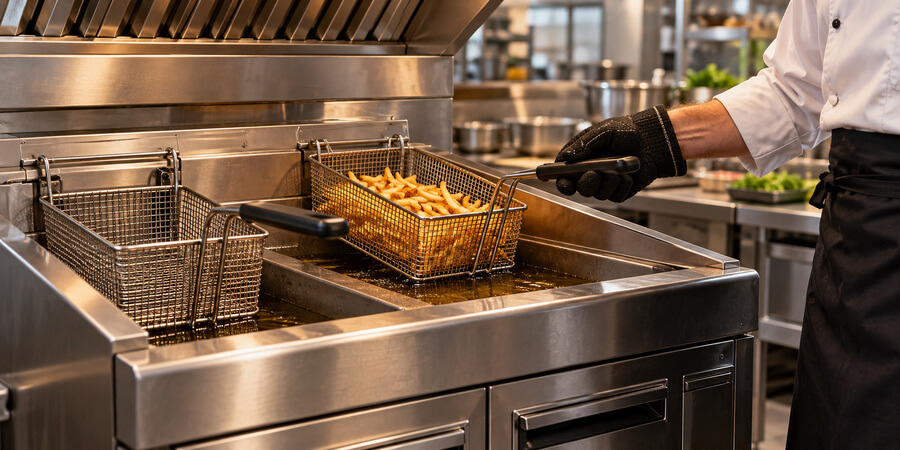
Table of Contents
Use a practical maintenance routine that protects fryer oil, food quality, cleaning safety, and long-term equipment uptime
Commercial deep fryer maintenance is one of those topics that gets simplified too much online. The question readers ask most often is usually some version of "how often should fryer oil be changed?" but that is only one part of the job. Oil life depends on menu mix, cooking volume, filtration discipline, temperature control, and how consistently the fryer is cleaned.
That is why the best maintenance plan is not a rigid internet rule. It is a repeatable routine that helps you judge oil condition accurately, clean the fryer safely, and catch the small problems that turn into downtime later. This guide is built around that practical reality so it can rank for oil-change intent while still giving operators a better answer than "every few days."
Why Fryer Maintenance Matters More Than Just Cleanliness
Good fryer maintenance protects four things at once:
- Food quality - cleaner oil and stable temperatures produce more consistent color, texture, and flavor.
- Oil life - filtration, crumb control, and proper shutdown habits slow degradation.
- Safety - disciplined draining, handling, and cleaning reduce burn and slip risk.
- Equipment life - sediment, carbon buildup, and neglected components shorten the life of fry pots, burners, and heating elements.
The Department of Energy's commercial kitchen guidance is helpful here because it frames fryers as high-energy equipment that spend a large share of their time idling, not actively cooking. That means idle heat management and oil care matter just as much as what happens during a rush. For broader context on fryer types and performance, see Gas Fryers vs Electric Fryers.
Stop Asking For A Universal Oil-Change Schedule
The most searched fryer question is usually about frequency, but the truthful answer is that oil life varies widely.
These factors change how fast oil breaks down:
- breading load and crumb shed
- moisture content of the food
- operating temperature and recovery behavior
- whether staff skim and filter consistently
- how often the fryer is topped off with fresh oil
- whether the vat is overloaded during service
- the type of oil your kitchen uses
That is why a universal statement like "change fryer oil every X days" creates more problems than it solves. One kitchen frying lightly breaded items with disciplined filtration may get much better life than a high-volume operation running wet, heavily breaded product all day.
The better standard is this: use your fryer manual, train staff on visible oil-condition signals, and rely on oil-quality checks where available instead of guessing.
What Oil-Change Signals Actually Matter
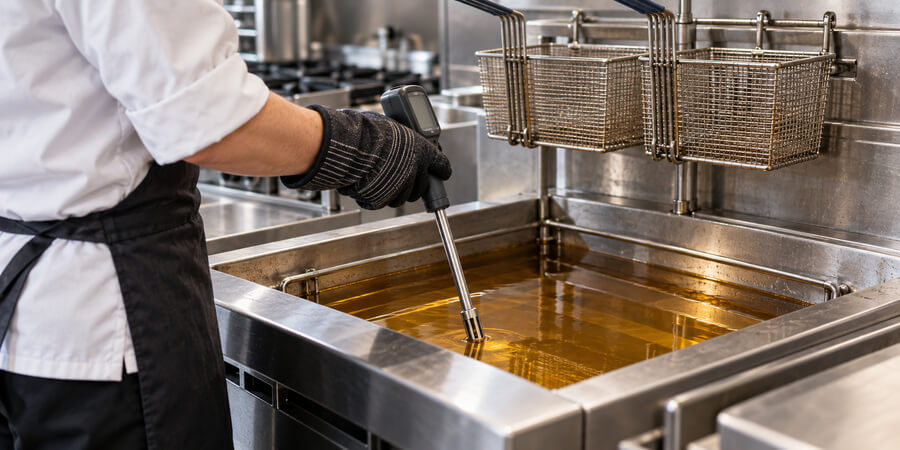
If your team only changes oil by calendar habit, you can still miss the real condition of the vat. Look for a combination of operational and visual signals.
| Signal: | What It Usually Means: | What To Do: |
| Oil darkens quickly and stays dark | Heavy crumb load, carbon, or advanced degradation | Filter, skim, and assess whether the vat is already past useful life |
| Excessive smoking at normal frying temperature | Oil quality is deteriorating or temperature control is off | Verify thermostat performance and prepare for oil change |
| Foaming or unusual bubbling | Moisture contamination, degraded oil, or product-related loading issues | Review product handling, temperature, and oil condition |
| Bitter or stale flavor | Oxidation and breakdown are affecting taste | Change oil and review filtration habits |
| Food colors too fast while cooking poorly inside | Oil quality or temperature control problem | Check calibration and oil condition together |
| Sticky residue around the vat | Oil is breaking down and carbonizing | Clean the fryer more thoroughly and review daily wipe-down habits |
If your operation uses objective oil-quality tools, that is even better. Oil test strips, meters, or other quality-monitoring systems help reduce guesswork. The Fryer Oil Filtration Guide explains where filtration and monitoring fit into a larger oil-management routine, and Fryer Oil Test Kits & Devices can help standardize decision-making.
A Daily, Weekly, And Periodic Fryer Maintenance Routine
The easiest way to improve fryer performance is to separate the work into routines. That keeps the staff from treating every fryer task like one giant messy project.
| Frequency: | Task: | Why It Matters: |
| Throughout the day | Skim crumbs and debris | Sediment accelerates oil breakdown and scorches in the vat |
| Daily | Filter oil according to your fryer and workload | Routine filtration slows degradation and improves product quality |
| Daily | Wipe exterior surfaces, handles, and splash areas | Reduces grease buildup and keeps controls easier to inspect |
| Daily | Check around the fryer for leaks, standing oil, or unstable casters | Catches safety and service issues early |
| Daily or per manual | Confirm temperatures are consistent | Prevents undercooking, overbrowning, and wasted oil |
| Periodic per manual | Perform a full boil-out or deep clean | Removes carbon and residue the daily routine cannot handle |
| Periodic per manual | Inspect burners, elements, probes, and related components | Prevents small performance issues from turning into downtime |
This is also where many kitchens discover that their "oil problem" is really a process problem. Inconsistent skimming, overloaded baskets, wet product, or skipped filtration can destroy oil quality long before the calendar says it is time to change it.
If you are reviewing equipment fit at the same time, the Commercial Fryer Buying Guide is worth reading.
Filtration Is Usually The Biggest Oil-Life Lever
Filtration is not magic, but it is one of the biggest controllable factors in fryer maintenance. Removing crumbs and suspended particles slows the cycle where sediment burns, darkens the oil, and affects flavor.
That does not mean every kitchen needs the same filtration cadence. The right frequency depends on your menu and volume. A fryer working through a constant stream of breaded protein may need much more attention than a fryer used for lower-sediment items.
What matters is consistency:
- filter according to the fryer's design and your workload
- train staff to skim during service, not only at close
- top off with fresh oil thoughtfully rather than using top-off to hide degraded oil
- keep separate vats for incompatible products when possible
If you are improving the process or adding support equipment, browse Fryer Oil Filters and Shortening Oil Disposal Units for the tools that make the routine easier to follow safely.
How To Clean A Commercial Fryer More Safely
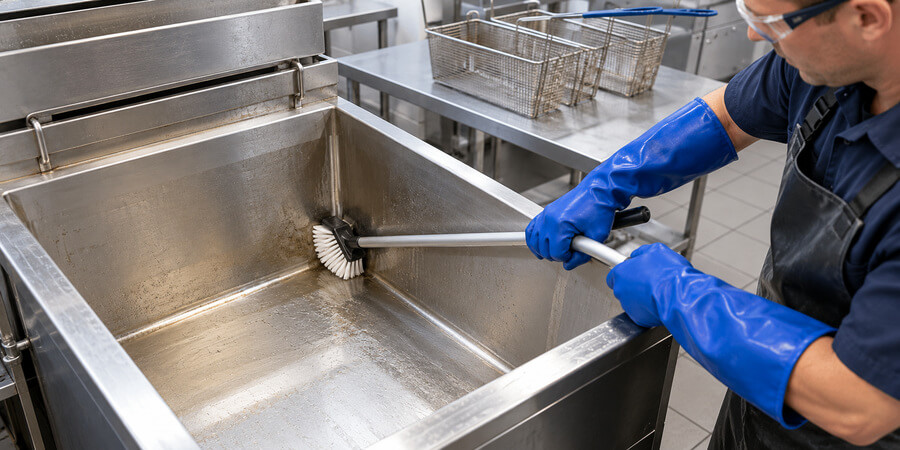
Cleaning a commercial fryer is not just a sanitation task. It is a heat, chemical, and burn-risk task. That is why the manual matters so much.
At a high level, a safer fryer-cleaning workflow looks like this:
- Schedule downtime. Do not start when the line is still depending on the vat.
- Shut down and cool according to the manual. Hot oil handling is one of the biggest hazard points.
- Drain oil using the correct path and tools. Use approved containers and stable handling procedures.
- Remove loose debris. Skimmed sediment is easier to deal with before deeper cleaning begins.
- Clean the vat and accessible surfaces according to the manual. For deeper cleaning, follow the boil-out or chemical-cleaning instructions for your exact fryer.
- Rinse and dry as required. Residual water and fryer startup do not mix well.
- Refill, restart, and verify operation. Make sure temperature response and controls are normal before service resumes.
For cleaning products, start with purpose-built fryer options such as food equipment cleaners, descalers, and degreasers for fryers, but let the manual and product label dictate the exact process.
Daily Habits That Extend Oil Life
A fryer can lose oil life long before anyone notices it on the close checklist. The best kitchens protect the vat throughout the day.
Skim aggressively. Small particles become bigger problems once they burn.
Avoid temperature creep. Running hotter than necessary darkens oil faster and hurts product consistency.
Load product consistently. Overloading baskets drags down temperature and stresses both the oil and the equipment.
Keep water away from the vat. Water is one of the fastest ways to create dangerous popping and foaming.
Top off strategically. Fresh oil helps, but topping off is not a substitute for changing degraded oil.
Keep nearby surfaces clean. Exterior grease buildup is not just messy. It makes leaks and other changes harder to spot.
These habits are not glamorous, but they are usually what separates a fryer that runs predictably from one that constantly feels "off."
What Changes Between Gas And Electric Fryer Maintenance
The core oil-management work is similar on both, but gas and electric fryers do have different maintenance considerations.
Gas fryers bring burners, ignition systems, and combustion-related airflow into the picture. If the flame pattern is poor or heat recovery changes noticeably, the issue may go beyond oil quality.
Electric fryers trade combustion components for heating elements and related electrical parts. Sediment management still matters because buildup around the cooking area affects efficiency and cleanup.
In both cases, routine operator maintenance should stay within the manual's cleaning and inspection guidance. Anything involving component diagnosis, wiring, gas train issues, or recurring temperature instability belongs with a qualified technician.
If you are deciding between fryer types as part of a replacement plan, the Commercial Deep Fryers category and Gas Fryers vs Electric Fryers are the best next reads.
Safety, Compliance, And Burn Prevention
Commercial fryer safety is partly about policy and partly about disciplined habits. OSHA's general duty framework, NFPA 96 fire-safety standards, and manufacturer instructions all point toward the same operational themes: training, hazard control, clean equipment, and consistent procedures.
In day-to-day terms, that means:
- training staff before they drain or move hot oil
- keeping PPE and approved transport tools accessible
- keeping floors dry and slip risks under control
- maintaining ventilation and adjacent grease-management routines
- not improvising boil-out chemistry or container handling
The safest fryer-cleaning program is the one your team can perform consistently without shortcuts.
When A Fryer Needs Service Instead Of Better Cleaning
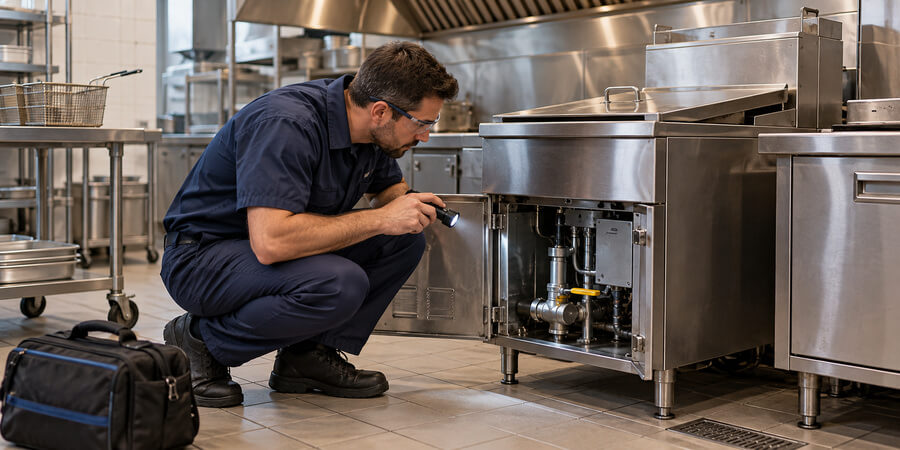
It is easy to assume every performance problem is an oil problem. Sometimes it is, but not always.
Call for service or escalate internally if you see:
- repeated trouble holding temperature
- inconsistent recovery that does not improve with clean oil and normal loading
- leaks around valves or connections
- ignition or burner irregularities on gas units
- unusual control behavior or failed heating response on electric units
- repeated smoking or scorching that suggests a deeper temperature-control issue
Cleaning and oil changes should improve fryer performance. If they do not, use that as a sign to stop guessing and diagnose the real issue.
Frequently Asked Questions
How often should fryer oil be changed in a restaurant?
There is no safe universal interval that fits every kitchen. Oil life depends on menu mix, volume, temperature control, filtration habits, top-off practices, and the type of oil you use. The best approach is to combine the fryer manufacturer's guidance with real oil-condition signals and objective oil testing where available.
What is the best sign that fryer oil needs to be changed?
Look for a pattern rather than a single clue. Dark color, smoking at normal temperature, off flavors, foaming, sticky residue, and poor product color are all meaningful. When those signals show up together, the vat is usually past its best working life.
Does filtering fryer oil mean I can wait longer to change it?
Filtration usually helps extend oil life because it removes the particles that accelerate degradation, but it does not make oil last forever. You still need to watch quality, follow the manual, and change the oil when it is no longer producing safe, consistent results.
How often should a commercial fryer be cleaned?
Some cleaning tasks should happen every day, especially skimming, wiping key surfaces, and keeping the area around the fryer clean. A deeper boil-out or full vat-cleaning schedule should follow the manufacturer's instructions and your workload. High-volume kitchens often need more frequent attention than lighter-use operations.
Can I just top off fryer oil instead of changing it?
No. Topping off helps maintain level and can improve performance temporarily, but it does not reverse degraded oil. If the vat already shows strong breakdown signals, adding fresh oil only masks the problem for a short time.
What should I do with used fryer oil?
Follow your operation's disposal process, local requirements, and the equipment instructions for safe draining and transfer. Approved oil handling and disposal equipment can reduce burn risk and make the routine easier to perform consistently.
Related Resources
- Fryer Oil Filtration Guide - A deeper look at filtration strategy, oil-life protection, and system options.
- Commercial Fryer Buying Guide - Helpful if maintenance issues are pushing you toward a replacement decision.
- Gas Fryers vs Electric Fryers - Compares fryer types, infrastructure needs, and operating tradeoffs.
- Commercial Deep Fryers - Category page for comparing fryer formats and capacities.
- Fryer Oil Filters - Filtration equipment that supports better oil-management routines.
Share This!